Elements biographiques
Syed Barakat Ahmad est l’auteur d’une thèse de doctorat qui tente de remettre en cause la réalité des massacres des tribus juives de Yathrib (selon les textes d’Ibn Ishaq).
Il était un universitaire issu de la communauté de la Ahmadiyya. Il fut titulaire d’un doctorat en histoire arabe à l’Université américaine de Beyrouth et d’un doctorat de littérature de l’Université de Téhéran. Il eut également de hautes reponsabilités dans des instances internationales. (West Indies, Indian High Commission en Australie et ONU).
Presentation
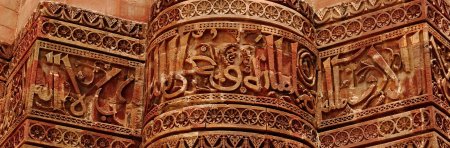
The splendor of the Qur’anic script and its graphic economy are the two remarkable features, which distinguish it from any other script in the world. These very features daunt an admirer and discourage a non-Arab from learning it. An antiquated system of teaching has made the task much more formidable. The art of Qur’anic calligraphy, which occupies the central place in Muslim visual culture, has declined with the spread of printing and universal education. The invention of movable type effectively killed this art, and all too often the printed text of the Qur’an lacked both splendor and legibility. In recent years, however, the art of writing and printing the Qur’an has undergone a revolutionary change. The style of writing, known as Naskh, has been especially developed with emphasis on easy and correct reading rather than beauty. This Qur’anic Naskh is now a basically functional style of writing that presents a minimum of difficulty to the reader. (Lire la suite...)
Table des matières
HOME
TITLE
DEDICATION
PREFACE
INTRODUCTION
ENGLISH SYMBOLS FOR ARABIC VOWELS
LESSON 1
LESSON 2
LESSON 3
LESSON 4
LESSON 5
LESSON 6
LESSON 7
LESSON 8
LESSON 9
LESSON 10
LESSON 11
LESSON 12
LESSON 13
LESSON 14
LESSON 15
LESSON 16
LESSON 17
LESSON 18
LESSON 19
LESSON 20
LESSON 21
LESSON 22
LESSON 23
LESSON 24
LESSON 25
LESSON 26
LESSON 27
LESSON 28
LESSON 29
LESSON 30
EXPLANATORY NOTE
APPENDIX
TRANSLITERATION OF PRACTICE TEXT