L’auteur/the author
Ibn Warraq est le pseudonyme d’un écrivain américain. Chercheur et islamologue controversé, il défend un humanisme laïc universaliste. Sous son impulsion, les éditions Prometheus Books de New-York (ré)éditent des oeuvres majeures de la "coranolologie" contemporaine.
Presentation et table des matières
Few Muslims realise that there are several Korans in circulation in the Islamic world, with textual variations whose significance, extent, and meaning have never been properly examined. Ibn Warraq has here assembled important scholarly articles that address the history, linguistics, and religious implications of these not-trifling variants in Islam’s sacred book.
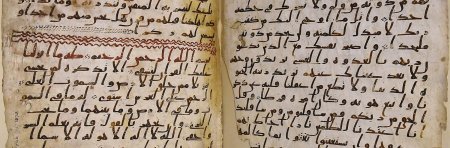
In a lengthy introduction, Warraq notes that historical and linguistic evidence suggests that there was considerable confusion regarding what should be included in the Koran in the early years of Muslim history. Although the caliph Uthman canonised a specific text some fifteen years after the death of Muhammad, variant readings of certain passages have persisted to the present. This can be seen in discrepancies between the two main printed versions of the Koran available today (the Warsh transmission found in West and Northwest Africa and the Hafs transmission, stemming from Kufa, and widely available through the standard Egyptian edition of 1924). This, coupled with the fact that Muslim secondary literature (the "Hadiths") discusses missing Koranic verses and even Muhammad’s sometimes faulty memory, strongly indicate that the Koran cannot be considered an inert revelation.
Warraq organises the articles in this volume into subsections dealing with the
1. language of the Koran;
2. pre-Islamic poetry and its possible influence on the writing of the Koran;
3. influences from Jewish and Christian sources and from "Qumran" (the "Dead Sea Scrolls");
4. problems of obscure vocabulary and orthography;
5. variant readings in different Koranic manuscripts; and, questions surrounding
6. the biography of the prophet Muhammad.
As a visual aid, Warraq has compiled a unique and valuable chart of thirty-two Koranic variants found in Korans available in the Islamic world, along with remarks on their significance. In-depth yet accessible to non-specialists interested in Islam, "Which Koran?" raises important questions about Islam’s holy book.